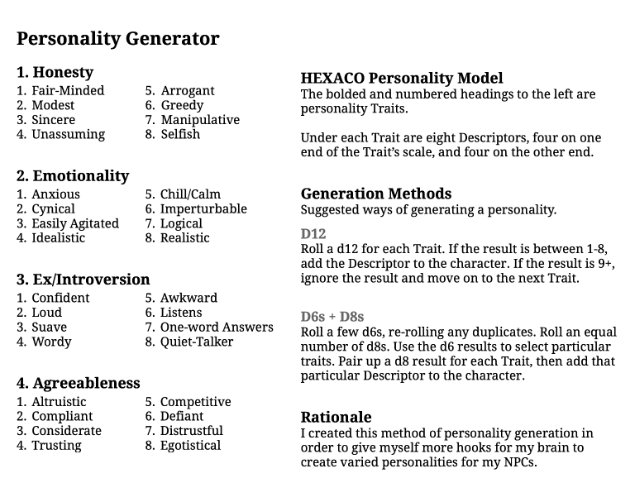
What breathes life into a fictional world, making it feel vibrant and real? It's not just the sprawling lore or the intricate magic system. More often than not, it's the non-player characters (NPCs) – the quirky shopkeepers, the enigmatic mentors, the scheming rivals – who truly forge unforgettable experiences. Mastering the essential attributes for NPC generation is the key to creating personalities that players will remember, love, or even despise long after the dice have stopped rolling.
Forget dry stat blocks and generic descriptions. We're talking about characters with goals, flaws, and a presence that makes your players lean in, ask questions, and genuinely care about their fate. This guide will help you move beyond merely populating your world to truly animating it.
At a Glance: Crafting Compelling NPCs
- Beyond the Numbers: While game mechanics matter, personality, quirks, and unique mannerisms are what truly make an NPC memorable.
- Deepen Their World: Every impactful NPC needs a motivation, a dilemma, a threat, and personal hooks to connect with player characters.
- Quick & Dirty: Use the "3-Line Method" (appearance, portrayal, hook) for instant, table-ready characters.
- Consistency is Key: A consistent voice, unique quirks, and ties to their environment solidify an NPC's identity.
- Evolve & Adapt: NPCs shouldn't be static; track how they react to player actions and world events.
- Leverage Tools: From simple index cards to AI generators, use all available resources to spark inspiration and manage complexity.
Beyond the Stat Block: The Heart of a Character
The first mistake many aspiring world-builders make is focusing too much on what an NPC can do (their combat stats, their class levels) rather than who they are. While mechanical integration is vital for systems like D&D or Pathfinder, it's their personality that drives player engagement. Distinctive mannerisms, a compelling physical appearance, and core personality traits are what create recognition and make an NPC feel real.
Think of it this way: players might remember a powerful enemy, but they'll cherish the memory of the grumpy dwarven blacksmith who always offers sage (and slightly insulting) advice, or the nervous street urchin who unexpectedly saves their lives.
To build an NPC with true depth, you need to consider four core elements:
- Motivation: What Do They Want?
Every NPC should have a goal, an aspiration, or a deep-seated desire. Crucially, these goals should exist independent of the player characters. Maybe they want to save their struggling family business, discover a lost artifact, or gain revenge on a past wrong. This motivation gives them agency and helps you understand their actions.
- Example: Elara, the herbalist, isn't just selling potions. Her motivation is to find a rare flower that can cure her ailing sibling.
- Dilemma: What Stands in Their Way?
A goal without an obstacle is just a wish. A dilemma creates tension and gives the NPC something to struggle against. This could be a lack of resources, a competing faction, a personal failing, or a moral conflict.
- Example: Elara's dilemma? The rare flower grows in dangerous, monster-infested territory, and she can't leave her sibling untended for long.
- Threat: What's the Downside if They Fail?
Raise the stakes. What happens if the NPC doesn't achieve their motivation or overcome their dilemma? The threat provides urgency and defines the potential consequences.
- Example: If Elara fails, her sibling's condition will worsen, potentially leading to their death, and she’ll be consumed by guilt.
- Personal Hooks: How Do Players Connect?
These are the threads that allow player characters to weave themselves into the NPC's story. Hooks can be shared history, common enemies, a debt owed, a secret alliance, or even just a compelling story that resonates with a player's background.
- Example: One of the player characters might have a sibling who suffers from a similar rare illness, or perhaps they owe Elara a favor from a past encounter. Maybe Elara herself has a unique connection to a player's backstory, perhaps an old friend of their mentor.
By grounding your NPCs in these four elements, you build a character who isn't just a plot device, but a living, breathing entity within your world.
The Three-Line Blueprint: Instant NPCs, Lasting Impressions
Sometimes you need an NPC on the fly – a random tavern patron, a street vendor, or a guard you didn't anticipate your players interacting with. For these moments, the "3-Line Method" is your best friend. It provides just enough detail to make a character distinct without over-preparing.
For any quick NPC, jot down:
- Appearance: What do they look like? Focus on one or two defining visual traits.
- Example: A tall, gaunt figure with perpetually tired eyes.
- Portrayal: How do they act or speak? What's their most noticeable mannerism or speech pattern?
- Example: Speaks in short, clipped sentences, constantly polishing a small, tarnished silver locket.
- Hook: What information do they have, what role do they play, or what small secret do they hint at? This is how players might engage.
- Example: Knows a secret back entrance into the mayor's manor, but only if they're "properly motivated."
Keep these quick profiles on index cards or a simple digital note. When your players throw you a curveball and ask the random stablehand about the local bandit problem, you’ve got a personality ready to go. You can always flesh them out later if they capture player interest.
Crafting Memorability: Quirks, Voices, and Environments
What makes us remember people in real life? Often, it's a specific habit, a way they talk, or how they interact with their surroundings. Apply this same principle to your NPCs.
Distinctive Quirks
A unique verbal or physical affectation can create instant recognition. These are the details that players will latch onto and use to refer to the NPC later.
- Verbal Quirks: Rhyming speech, always speaking in commercial metaphors, constantly correcting grammar, a habit of repeating key phrases, speaking unusually fast or slow.
- Physical Quirks: Polishing a specific item (a coin, a monocle), snapping their fingers when thinking, adjusting their spectacles, a nervous tic (clearing their throat, drumming fingers), a distinctive gait.
A word of caution: use quirks sparingly for important NPCs, and vary them. If every other NPC has a tic, it loses its impact.
Voice & Speech Patterns
You don't need to be a voice actor with a dozen perfect accents. Consistency is far more important. Decide on a general voice (higher pitch, gruff, smooth) and a speech pattern (clipped sentences, complex vocabulary, hesitant delivery) and stick with it. This creates a recognizable auditory signature for your character.
- Pro Tip: Instead of accents, try speech impediments or peculiar vocabularies. A character who always uses archaic words or who has a slight lisp can be easier to manage than attempting a consistent Cockney accent through a four-hour session.
Environmental Ties
Connect your NPCs to their surroundings. How does their environment influence them, and how do they interact with it?
- An herbalist's shop might always have competing scents of lavender and pungent roots clinging to her clothes.
- A harbor master might reek of salt, tar, and fish, with sun-weathered skin and hands calloused from ropes.
- A librarian might have ink stains on their fingers and constantly shush patrons, even when not in the library.
These sensory details ground the NPC in the world and make them feel more real.
Visual Aids (For the GM)
While less about NPC generation and more about GM toolkit, using physical props (a specific hat, a scarf, a unique trinket) can help you as the GM remember the unique voice or mannerisms you've assigned to an NPC. When you put on the pirate's bandana, you naturally slip into their swagger.
Building Depth Over Time: Evolution & Relationships
The world doesn't stand still, and neither should your NPCs. They should react dynamically to player actions and world events, shifting their alliances, motivations, and even their appearance.
Dynamic Reactions
If players steal from an NPC, that NPC shouldn't greet them warmly the next day. If players save an NPC's life, that NPC will likely remember the favor. Keep simple notes on these interactions:
- Date: When did it happen?
- Event: What occurred?
- Attitude Change: How did the NPC's disposition towards the players (or other NPCs) change?
- New Goal/Relationship: Did this event spark a new ambition or forge a new connection?
These notes, whether in a spreadsheet or on index cards, help maintain continuity and make your world feel responsive.
Relationship Mapping
Important NPCs rarely exist in a vacuum. They have friends, enemies, rivals, mentors, and lovers. Creating visual maps showing these connections (love, debt, secrets, rivalry) between key NPCs can be incredibly powerful. This allows you to predict reactions, generate new plot hooks, and prevent continuity errors. If the players upset Lord Vance, you can quickly see who else might be affected because they owe Vance a debt, or who might secretly be pleased because they are his rival.
System-Neutrality: A Flexible Framework
The core principles of effective NPC generation are universal, regardless of whether you're playing Dungeons & Dragons, Call of Cthulhu, Fiasco, or Savage Worlds. The key is to create an NPC profile template that is usable across all systems.
While D&D and Pathfinder might require detailed stat blocks for important combatants (often drawing from resources like the D&D 5e Monster Manual for basic statistics or projects like the "Essential NPCs" which provide varied humanoid stat blocks across different challenge ratings), narrative-forward systems often thrive on simplified statistics.
Focus on the narrative elements first: personality traits, relationships with other NPCs, development notes, and potential hooks. For systems that demand mechanics, consider what level of detail is truly necessary. A minor merchant needs a personality, not a full combat sheet. A recurring antagonist might need a robust set of abilities that evolve with the campaign. For all-ages gaming, emphasize clear, understandable motivations for heroes, villains, and comedic sidekicks alike.
Tools of the Trade: Streamlining NPC Creation
You don't have to build every character from scratch. Leverage available tools to spark your imagination and manage your creations.
NPC Generators
Need a quick idea? NPC generators can provide excellent starting points.
- Donjon NPC Generator: A fantastic free resource for fantasy characters, offering names, traits, and basic backgrounds.
- Inworld AI NPC Generator: Can create dynamic, D&D-compatible NPCs with personalities and backstories.
- CharGen: An AI-powered, cross-system generator for varied characters.
- Universal NPC Emulator: Focuses on motivations and descriptors, great for understanding why an NPC acts.
Use these generators as a launchpad, then add your unique flair using the essential attributes discussed above.
AI-Powered Generation
Tools like ChatGPT, Claude, and other specialized AI platforms can be incredibly powerful for brainstorming. You can ask them to:
- Generate a backstory for a grumpy dwarven innkeeper.
- Create sample dialogue for a nervous elven ranger.
- Suggest motivations and secrets for a shadowy government official.
Remember, AI is a tool for inspiration, not a replacement for your creative vision. Always customize and refine what it provides. It's a great way to quickly flesh out ideas, giving you more time for the truly complex NPCs. You can even Try our NPC generator to see how quickly you can get a robust NPC concept.
Character Management Software
For long-running campaigns with complex NPC ecosystems, dedicated character management software can be a lifesaver.
- World Anvil: Offers detailed profiles, relationship tracking, and extensive cross-referencing capabilities for your entire world.
- Obsidian Portal: Another popular choice for campaign wikis and character tracking.
- Kanka: Provides similar features, allowing you to manage NPCs, locations, and lore in an interconnected database.
These platforms help you keep track of NPC evolution, relationships, and all those little notes that make your world consistent.
Beyond the Basics: Advanced Techniques & Inspiration
Once you've mastered the core attributes, consider these advanced techniques to elevate your NPC game.
Random Tables
Maintain personal tables of quirks, mannerisms, motivations, and secrets. When an unplanned NPC appears, roll on a few tables to instantly generate a personality. This is particularly useful for those "random encounter" characters.
Encounter Modules
Design flexible NPC encounters. Instead of a single-purpose NPC, create characters who can serve multiple roles across social, combat, or exploration scenarios. A seemingly innocent merchant could be a spy, a quest-giver, or even a formidable foe depending on player actions.
Learning from the Masters
Study how video games and literature create memorable NPCs.
- CRPGs like Disco Elysium excel at complex characters with conflicting goals, deep backstories, and unexpected emotional depth, often revealed through extensive dialogue.
- LitRPGs or other fantasy novels showcase "hub NPCs" – characters who serve as anchors in the narrative, connecting players to various plotlines and other characters.
Pay attention to how these narratives build characters through dialogue, internal conflict, and their impact on the world around them.
Community Resources
Don't reinvent the wheel! Online communities are treasure troves of ideas and best practices.
- r/DMAcademy: A Reddit community specifically for Game Masters looking for advice and inspiration.
- The DM Lair, The Alexandrian, Roleplayingtips.com: Websites and blogs offering in-depth articles and tools for GMs.
- TTRPG Kids blog: Even if not for children's games, this site often has excellent advice on clear motivations and engaging character concepts.
Common Pitfalls to Avoid
Even with all the tools and techniques, it's easy to fall into common traps when generating NPCs.
- One-Dimensional Characters: NPCs who only have one trait (e.g., "the angry guy") quickly become boring. Give them layers.
- NPCs Existing Only to Serve Players: While many NPCs will help the players, ensure they have their own lives and agendas. If every NPC is just a quest-giver or information-dump, the world feels less real.
- Forgetting NPC Evolution: A static world with static characters feels lifeless. Remember to track changes and reactions.
- Over-Reliance on Stat Blocks: Don't let mechanics overshadow personality. A powerful enemy is still more compelling if they have a clear motivation and a distinctive quirk.
- Too Many Quirks: A single, well-placed quirk is memorable. Three or four make an NPC feel like a caricature.
Your NPC Quick Reference Template
To help you get started, here's a template you can use to quickly sketch out your essential NPC attributes. Copy it, print it, and fill it in!
| Attribute | Description | Your NPC's Details | Name | Source | Example Trait | Sample Motivation | Possible Quaching | Potential Hook |
| :--- | :----- | :------------ | :---------------- | :-------------- | :------------- |
| Elara | Local Herbalist | Soft-spoken, always smells of herbs, worried expression | Find a rare cure for her ailing sibling | Constantly adjusts small spectacles | Needs rare ingredients from a dangerous location, fears for her sibling. |
| Borin | Blacksmith | Gruff, massive arms, a perpetually smudged face | Build the finest siege weapon in the realm | Sings off-key dwarven sagas while working | Complains about stolen materials, offers superior craftsmanship for a steep price. |
| Lyra | Street Urchin | Quick-witted, nimble, wary eyes, dirt smudges on her cheek | Find enough food to feed her younger siblings | Fiddles with a small, carved wooden bird | Overheard a crucial conversation between local criminals, offers information for coin/food. |
| Kaelen | City Guard Captain | Stern, meticulous, scar over one eye | Uphold the law and root out corruption in the city | Taps his fingers impatiently when listening to longwinded stories | Suspects high-ranking officials are involved in illicit activities, seeks an impartial investigator. |
Bringing It All Together: The Art of Unforgettable NPCs
Creating compelling NPCs is an art, not a science. It's about finding the balance between thorough preparation for your core cast and the flexibility to improvise when your players take an unexpected turn. The goal is always the same: to create characters that players genuinely want to interact with, whether they are deeply developed rivals or simple merchants with a memorable quirk.
Start with the essential attributes for NPC generation: what do they want, what's in their way, what are the stakes, and how do your players connect? Build a strong personality first, then layer on the mechanics as needed. Don't be afraid to let an NPC evolve, adapting to the campaign's unfolding story.
Your players will thank you for it. After all, the most epic quests are often just an excuse to spend more time with the fascinating personalities that inhabit your world. So, go forth and create some unforgettable characters!